
Interest in semaglutide has expanded beyond blood sugar regulation and weight management into broader metabolic health, including liver-related conditions such as fatty liver disease and metabolic dysfunction–associated steatohepatitis (MASH). These conditions are increasingly common and closely tied to obesity, insulin resistance, and systemic inflammation.
This page reviews current research on semaglutide in the context of liver health. It focuses on what clinical trials and observational studies suggest about fatty liver, MASH, and related biomarkers—while also highlighting the limitations and uncertainties of the available evidence.
The goal is not to draw conclusions or make treatment claims, but to help readers understand how semaglutide is being studied in this area and how to interpret those findings in context.

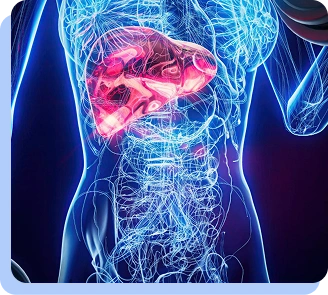

Fatty liver disease refers to the accumulation of excess fat in liver cells. It is often associated with metabolic risk factors such as:
The condition exists along a spectrum. Early stages may involve simple fat accumulation (steatosis), while more advanced stages can involve inflammation and tissue damage.
Metabolic dysfunction–associated steatohepatitis (MASH), previously referred to as nonalcoholic steatohepatitis (NASH), represents a more severe form of fatty liver disease. It includes:
MASH is clinically significant because it can progress to:
Given the limited number of approved treatments for MASH, there has been growing interest in medications that target underlying metabolic dysfunction—including GLP-1 receptor agonists like semaglutide.
Semaglutide is a GLP-1 receptor agonist. It is primarily studied and used for:
However, these metabolic effects are closely linked to liver health. Current research suggests that semaglutide may influence liver-related outcomes through:
Because fatty liver and MASH are strongly associated with metabolic dysfunction, researchers are exploring whether improving these underlying factors could also improve liver-related endpoints.
For a broader overview of how semaglutide affects metabolic pathways, see the main research hub: /semaglutide-research/.
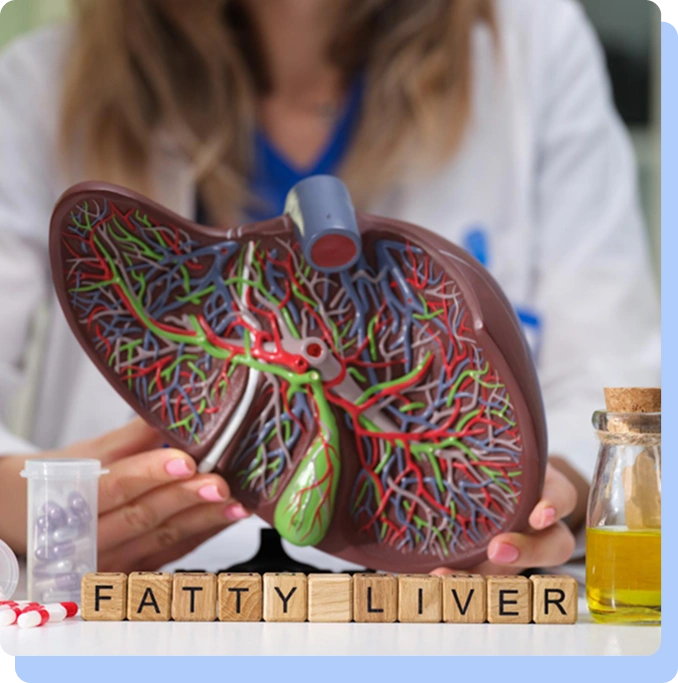
Several clinical studies have evaluated semaglutide’s effect on liver fat using imaging techniques such as MRI-derived proton density fat fraction (MRI-PDFF).
What current research suggests:
However, it is important to note that:
One of the most consistent findings across studies is that reductions in liver fat are closely tied to overall weight loss.
This raises an important question:
Current research does not fully separate these effects. In many cases, weight loss is likely a major driver of improved liver markers.
For more detail on weight-related outcomes, see: /semaglutide-research/weight-management/.
Semaglutide is not a traditional cardiovascular drug. Instead, its effects on heart health are thought to occur through multiple indirect pathways.
Semaglutide is associated with reductions in body weight in many clinical trials. Weight loss is linked to improvements in:
These changes may collectively reduce cardiovascular strain over time.
For more detail, see weight management research.
In people with type 2 diabetes, semaglutide helps lower blood glucose levels.
Improved glycemic control is associated with:
You can explore this further on the blood sugar page.
Some studies report modest reductions in:
While these changes are not dramatic on their own, they may contribute to cumulative cardiovascular benefit when combined with other effects.
There is ongoing research into how GLP-1 receptor agonists may influence inflammatory pathways.
Chronic inflammation plays a role in:
However, this area remains investigational. More detail is available in semaglutide and inflammation.
Semaglutide’s influence on appetite and food intake may indirectly support cardiovascular health by:
See appetite and food behavior research for more context.
Liver health does not exist in isolation. Many individuals with fatty liver or MASH also have:
Semaglutide’s effects on:
may indirectly influence liver outcomes.
For related research, see:
A key ongoing question in research is whether semaglutide has:
At present, most evidence supports a largely indirect mechanism, though this remains an area of active investigation.

Some studies have observed small increases in resting heart rate with GLP-1 receptor agonists, including semaglutide.
The clinical significance of this is still being evaluated.
Common side effects such as nausea or reduced appetite may indirectly affect:
These factors can influence overall health outcomes, including cardiovascular risk.
While several trials extend over multiple years, long-term (10+ year) cardiovascular outcomes are still being studied.
This is particularly relevant for:
Retatrutide’s effects on weight and body composition are thought to involve multiple overlapping mechanisms.
Activation of GLP-1 and GIP receptors may influence:
Participants in studies often report reduced appetite, though subjective responses vary.
The glucagon receptor component of retatrutide is of particular interest because it may:
This distinguishes retatrutide from some other investigational compounds that primarily focus on appetite suppression.
Retatrutide is also being studied for its potential impact on:
These metabolic changes may indirectly support weight loss and body composition improvements, though causality is still being explored.
For a more detailed breakdown, see the retatrutide mechanism of action page.



Retatrutide is often discussed alongside other incretin-based therapies, particularly those targeting GLP-1 or GLP-1/GIP pathways.
Retatrutide falls into the third category, which may explain the level of interest in its research. However, greater complexity also means more variables to study, including safety considerations.

Most available data comes from studies lasting several months to just over a year. Within these timeframes:
Many studies are relatively short-term (often under 1–2 years). Liver disease progression occurs over much longer periods.
Study populations often include individuals with:
Results may not apply equally to:
As noted earlier, weight loss is a major driver of liver improvement.
While inflammation may improve, fibrosis outcomes are less consistent.
Semaglutide is being studied for liver-related conditions, but:
Retatrutide remains an investigational medication. Current findings are based on controlled studies, and additional research is needed before drawing firm conclusions.
Participants in clinical trials often meet specific criteria, which may limit generalizability. Factors such as age, medical history, and lifestyle can influence outcomes.
Body weight and composition are influenced by many variables, including:
Retatrutide is being studied as one potential factor within a broader context.
Different studies use different tools to assess body composition, which can affect how results are interpreted and compared.
Semaglutide is being studied for fatty liver disease, and current research suggests it may reduce liver fat and improve related markers. However, its role specifically for fatty liver treatment depends on regulatory approvals and clinical guidance, and more research is needed.
Some studies suggest that semaglutide may help resolve steatohepatitis (inflammation), but effects on fibrosis are less consistent. MASH is a complex condition, and no single intervention guarantees reversal.
Most evidence suggests that liver improvements are closely tied to weight loss and metabolic changes. It remains unclear how much of the effect is independent of these factors.
Semaglutide has specific approved uses, but its role in liver disease is still being studied. It is important to distinguish between approved indications and investigational research.
Studies commonly use:
Each method has limitations, and results should be interpreted carefully.
Semaglutide is increasingly being studied in the context of liver health, particularly for fatty liver disease and MASH. Current research suggests that it may reduce liver fat, improve inflammatory markers, and in some cases contribute to resolution of steatohepatitis.
At the same time, important uncertainties remain. Many of the observed benefits appear closely linked to weight loss and broader metabolic improvements, and effects on fibrosis are less consistent. Long-term outcomes and direct liver-specific mechanisms are still under investigation.
For readers exploring semaglutide research, it is helpful to view liver-related findings as part of a larger metabolic picture. Additional context can be found in related research areas such as weight management, inflammation, and cardiovascular outcomes within the broader research hub.
As with all emerging research, findings should be interpreted cautiously, and more data is needed to fully understand the role of semaglutide in liver health.